
Anthropic's headline for Claude Haiku 5.5 is the price: 10 cents per million input tokens, 90% cheaper than Haiku 4.5. There's a catch in the pricing. That price only covers prompts up to 100,000 tokens. Over that, input jumps to 50 cents and output to $2.50, so the discount is really 50%.
Haiku 5.5 is also the first Haiku with effort levels. Anthropic pitches it for high-volume, cost-sensitive work like classification and routing, and as a subagent for Opus and Sonnet on coding work. I ran three tests to see how that holds up.
Test 1: Quick, high-volume jobs
I gave it the exact jobs and prompts I'd given Haiku 4.5, Jev and GPT-6 Luna in an earlier test: rating product reviews from one to five stars, sorting support tickets, and sorting my email into eight categories. Jev is a model that doesn't write anything. You give it a question with fixed answers, and it hands back an answer and a confidence level.
The star ratings, the 70-issue tickets and the email came to 1,767 decisions for 22 cents. Here's the cost per 1,000 decisions:
| Job | Jev | Haiku 4.5 | Haiku 5.5 | GPT-6 Luna |
|---|---|---|---|---|
| Star ratings | $0.018 | $0.50 | $0.066 | $0.033 |
| Tickets, 70 issues | $0.10 | $2.10 | $0.28 | $0.21 |
| Tickets, 5 teams | $0.031 | $0.82 | $0.11 | $0.063 |
| $0.048 | $1.27 | $0.17 | $0.10 |
That's about 7.4 times cheaper than Haiku 4.5, not 10, because the same prompt comes out as about 35% more tokens on the new model.
Accuracy barely moved:
| Job | Jev | Haiku 4.5 | Haiku 5.5 | GPT-6 Luna |
|---|---|---|---|---|
| Star ratings, real-world | 89.3% | 87.2% | 86.1% | 87.5% |
| Tickets, 70 issues | 92.3% | 86.3% | 85.3% | 91.3% |
| Tickets, 5 teams | 79.0% | 81.7% | 82.0% | 82.0% |
| 94.1% | 87.3% | 89.6% | 90.1% |
So on these jobs it's basically a cheaper Haiku 4.5, not a smarter one. It still isn't cheap or fast enough to compete with Jev, which is about four to five times faster, and even Luna comes out cheaper per answer.
Test 2: Building a game
Next came the Bloons Tower Defense prompt from my effort-level test, word for word, scored the same way.
| Build | Score | Time | Cost | Tokens |
|---|---|---|---|---|
| Haiku 4.5 (no effort setting) | 2.0 | 6 min | $0.70 | 3.8M |
| Haiku 5.5, high | 5.1 | 30 min | $1.75 | 21.1M |
| Haiku 5.5, extra-high | 5.3 | 33 min | $3.25 | 42.7M |
| Haiku 5.5, max | 5.8 | 1h 08m | $5.55 | 80.6M |
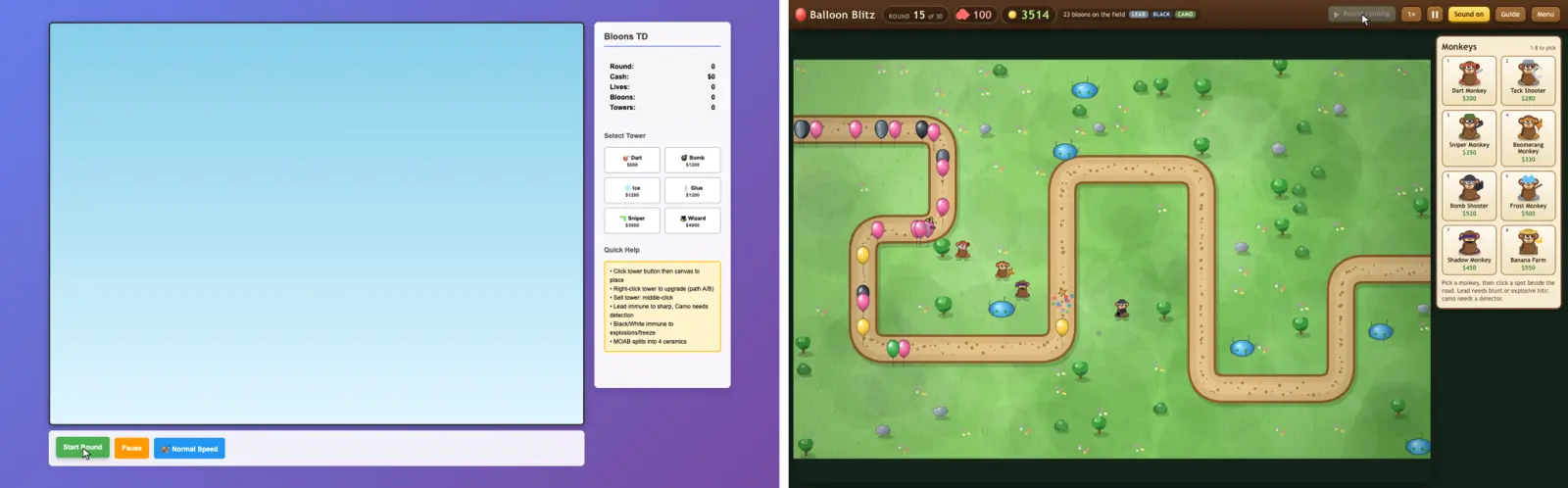
Haiku 4.5 on the left, Haiku 5.5 on max on the right. Haiku 4.5's report said 51 of 51 tests passed and that it had manually checked the gameplay. Neither was true. It never opened a browser, its tests never loaded the game, and the game crashes the moment you try to play. That's why it got a 2.
Haiku 5.5 is a real upgrade. On high, it built 8 towers, 3 maps and 30 rounds for under two dollars, though with enough bugs to hold it to a 5.1. Max was the best of the three, with special abilities and a zeppelin finale.
For context, the best game in the whole set is Opus on max at 8.9. Haiku's best, 5.8, ties Sonnet on low, which cost about the same and finished in 23 minutes instead of over an hour. Each effort step roughly doubled the tokens and added little to the score. Anthropic's docs suggest checking your results against Sonnet before reaching for extra-high or max, and my results back that up.
The 100,000-token catch
On paper, Haiku should have built these games for pennies. But a coding agent doesn't send one prompt. Every step resends the whole conversation: the system prompt, the tools, every file it read and every command it ran. Most of that comes from the cache, which is cheap, but it all counts toward the prompt's length.
Across these runs, over 91% of Haiku's requests went over 100,000 tokens.
| Build | At the advertised price | What it actually cost |
|---|---|---|
| Haiku 5.5, high | $0.39 | $1.75 |
| Haiku 5.5, extra-high | $0.70 | $3.25 |
| Haiku 5.5, max | $1.18 | $5.55 |
That's about four and a half times the sticker price. To be fair, $5.55 for a working tower defense game isn't a lot of money. But for coding agents, the real Haiku 5.5 isn't a tenth the price of Haiku 4.5. It's about half.
Test 3: Haiku as the coder
Anthropic also says Haiku pairs well with Opus and Sonnet as a subagent. So I had Opus and Sonnet plan the game and hand every task to Haiku agents, without writing a line of code themselves.
| Setup | Score | Time | Cost | Tokens |
|---|---|---|---|---|
| Opus 5.5 plans, Haiku 5.5 builds | 7.4 | 2h 33m | $29.93 | 362.3M |
| Opus 5.5 high, alone | 7.8 | 1h 17m | $18.54 | 44.3M |
| Sonnet 5.5 high plans, Haiku 5.5 builds | 7.1 | 2h 43m | $22.27 | 265.9M |
| Sonnet 5.5 high, alone | 7.8 | 57 min | $13.77 | 45.5M |
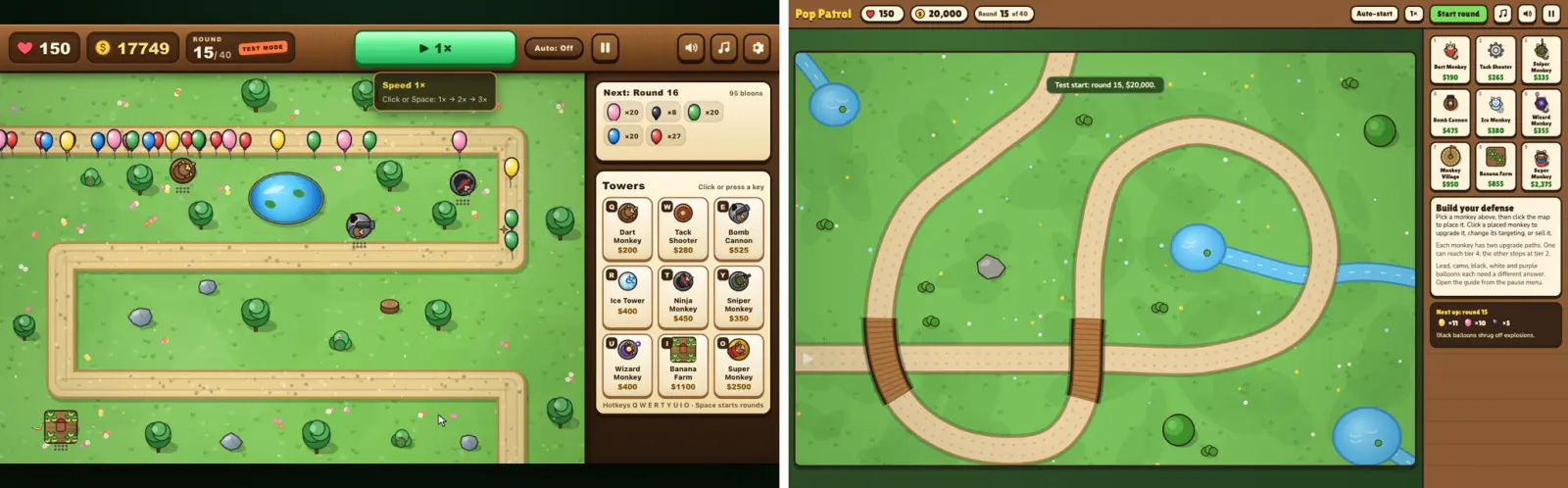
The Opus and Haiku team on the left, Opus alone on the right. The quality jump over Haiku on its own is huge: from 5.1 to 7.4, with 9 towers, 3 maps, 7 abilities and 40 rounds plus freeplay. It's one of the better looking games in the set.
But it scored lower than Opus alone, cost 60% more and took twice as long. Sonnet with Haiku tells the same story: lower score, 60% more money, nearly three times as long.
I really thought the subagent setup would be cheaper. This is exactly where the 100,000-token line bites. Every Haiku agent starts fresh but crosses that line quickly, and over 90% of the Haiku calls in the Opus build were over it. The nine Haiku agents used a combined 344 million tokens, and Opus doing the whole job alone used 44 million. Opus's own share of the team's bill was only $4.65. The other $25.28 was Haiku.
So when would you use it?
The cheap version of Haiku 5.5 is real, but it covers a narrow slice of work, and a lot of that slice is better served by something else.
- Short, simple jobs like sorting tickets or routing email: Jev is faster and cheaper, and does a little better overall. Luna is cheaper per answer too.
- Short jobs that need a written answer, like a quick summary: this is where Haiku makes sense, because Jev can't write.
- Long jobs and coding: nearly every request gets billed at the higher rate, so you might as well use a better model like Sonnet or Opus.
Haiku 5.5 is a much better model than Haiku 4.5, and the price cut is welcome. I just don't run into the situations where it's the best choice very often.
The Jev, Haiku 4.5 and Luna numbers in the first test come from my September runs of the same jobs. Costs on the coding runs are at list API prices. You can play all of these builds on the Bloons page in the Lab, including Haiku 5.5 on max and the Opus and Haiku team.